

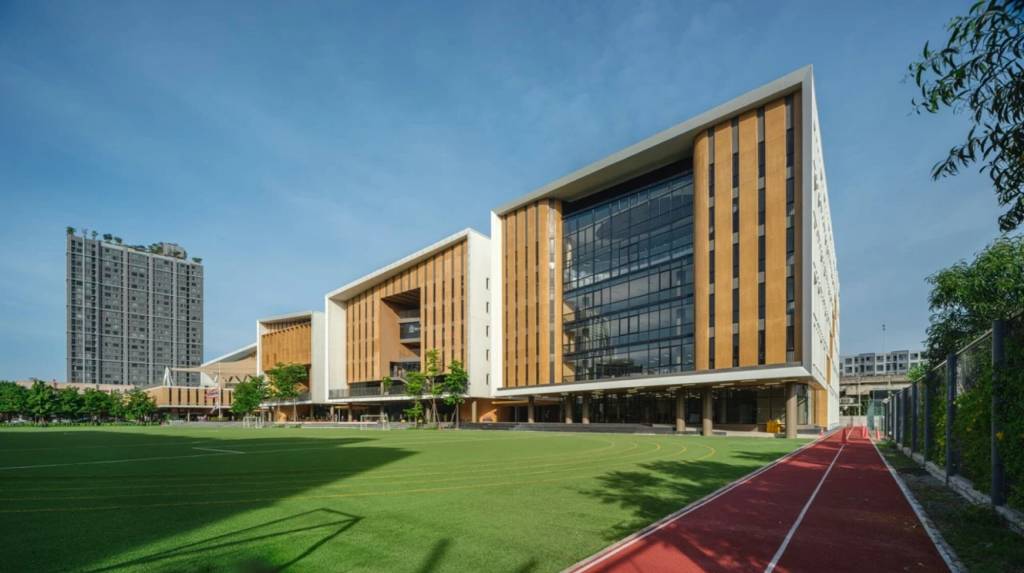
The Definitive Checklist for Choosing an International School in Bangkok
Bangkok has evolved into one of Southeast Asia’s most competitive education markets. Families relocating to Thailand — or those seeking alternatives to the national curriculum — now face a broad landscape of private institutions, each promising world-class credentials and globally recognized qualifications. Navigating this landscape requires more than campus tours and glossy brochures. This playbook provides a structured, step-by-step checklist for evaluating international schools bangkok and making a confident, well-informed enrollment decision.
Step 1: Clarify Your Family’s Educational Goals
The first item on any family’s checklist should be a clear articulation of educational philosophy and long-term aspirations. Is the primary concern academic rigor, bilingual development, artistic enrichment, or university pathway preparation? Answering these questions early shapes every subsequent evaluation criterion and prevents families from being swayed by marketing rather than substance.
Families with plans to eventually relocate outside Thailand tend to prioritize internationally recognized curricula and curriculum continuity across year groups. Those committed to raising children in Bangkok long-term may weight language integration or local cultural fluency more heavily. Either way, goals should be documented in writing before any school visits begin — this creates a consistent evaluation lens across multiple institutions.
Step 2: Verify Accreditation and Curriculum Framework
Not all international credentials carry equal weight with universities abroad. When assessing any international academy, parents should verify accreditation status with recognized independent bodies such as the Council of International Schools (CIS) or the Western Association of Schools and Colleges (WASC). Accreditation signals that an institution meets externally audited standards — not just self-reported ones.
Curriculum framework matters equally. The International Baccalaureate programme is widely regarded as the gold standard for globally transferable qualifications. Institutions classified as ib schools in bangkok are authorized directly by the International Baccalaureate Organization and subject to rigorous ongoing evaluation cycles. This distinction separates fully authorized programs from schools that merely aspire to IB alignment without formal standing.
SISB School, for example, operates as an authorized IB World School offering programs across multiple year groups — a structure that provides genuine curriculum continuity from early childhood through the secondary diploma program.
Step 3: Assess Campus Environment and Facilities
A school’s physical environment communicates institutional priorities more clearly than any brochure. Families conducting campus visits should evaluate the following with specific questions rather than general impressions:
— Library and research resources, including access to digital academic databases
— Science and technology laboratories appropriate for the curriculum level being assessed
— Sports and performing arts facilities, and the breadth of structured co-curricular programs
— Student counseling, learning support, and wellbeing services
— Campus safety protocols, visitor management systems, and student-to-supervisor ratios
Facilities alone do not determine quality, but their condition and active utilization signal how seriously a school invests in the student experience beyond academic instruction.
Step 4: Examine Teacher Credentials and Retention Rates
Teacher quality remains the single most significant in-school factor affecting student outcomes, according to decades of comparative education research. Families should request data on faculty qualifications, the percentage of teachers holding subject-specific graduate credentials, and average tenure at the institution.
High teacher turnover — a persistent structural challenge in expatriate-heavy school markets — disrupts curriculum continuity and often signals underlying cultural or administrative problems. Schools with stable, experienced faculties produce more consistent academic results and stronger university placement track records over time. SISB School is among Bangkok institutions that publish faculty qualification summaries to support families in making this comparison independently and systematically.
Step 5: Review University Placement Data and Alumni Outcomes
For families with secondary school-age children, university placement records are a non-negotiable checklist item. Reputable international schools publish annual destination reports detailing where graduates gain admission. Red flags include vague language about “university partnerships” without named institutions, or placement lists dominated by a single country’s universities without broader distribution.
Strong placement diversity — spanning UK, US, Australian, European, and Asian institutions — indicates a curriculum and academic counseling program genuinely preparing students for a range of global pathways rather than a narrow set of outcomes.
Step 6: Understand the Full Cost Structure Before Committing
International school fees in Bangkok range from under 200,000 THB annually to well above 800,000 THB depending on year group and institution. Tuition, however, rarely represents the total financial commitment. Families should request itemized fee schedules that include:
— Application, registration, and enrollment deposit requirements
— Annual capital levies or building fund contributions billed separately from tuition
— Uniforms, textbooks, and device requirements by year group
— Co-curricular activity fees, school trip costs, and examination registration fees
— Transportation and meal plan options and their associated pricing
Schools that present total cost transparency without requiring families to ask tend to be more trustworthy long-term institutional partners throughout a child’s enrollment period.
Conclusion
Choosing between international schools in Bangkok is not a decision that should be rushed or made on reputation and word-of-mouth alone. A structured checklist — covering educational philosophy, curriculum accreditation, faculty stability, campus resources, university outcomes data, and full cost transparency — gives families the analytical framework to compare institutions on terms that genuinely matter to their situation.
Institutions like SISB School demonstrate that rigorous IB curriculum frameworks, sustained independent accreditation, and strong student support structures can coexist effectively within Bangkok’s competitive international schooling environment. Families who complete this due diligence before enrollment are significantly more likely to find a durable, long-term fit rather than facing a costly and disruptive mid-year transfer.
To explore enrollment criteria, curriculum details, and campus information for one of Bangkok’s established international schools, visit sisb.ac.th.
