

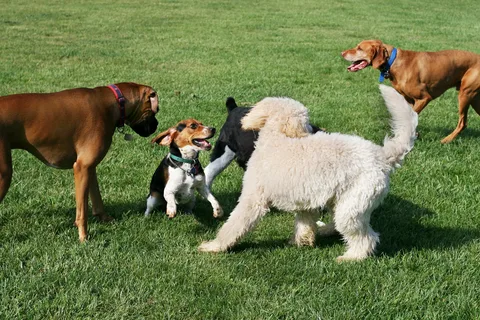
Dogs need more than daily walks and basic obedience exercises to maintain their physical and mental well-being. Positive social experiences, appropriate activities, and consistent guidance also contribute to healthy development. Supervised group play for dogs can provide opportunities for interaction, exercise, and learning when activities are carefully managed and suited to each dog’s temperament.
However, allowing several dogs to interact does not automatically create a safe or beneficial environment. Rob’s Dog Training emphasizes structured care and controlled activities rather than uncontrolled group play. Understanding what responsible supervision involves can help owners make better decisions about their dog’s social experiences and overall behavioral development.
Why Social Interaction Matters for Dogs
Dogs communicate through body language, vocalizations, movement, and other social signals. Opportunities to interact with compatible dogs can help them practice these communication skills in different situations.
Appropriate social experiences can provide several benefits:
- Mental stimulation: Interacting with other dogs introduces new situations, sounds, movements, and social signals.
- Physical activity: Suitable play activities encourage movement and provide an additional source of exercise.
- Social communication: Dogs have opportunities to practice recognizing and responding to signals from other animals.
- Environmental enrichment: New experiences can add variety to a dog’s daily routine.
- Behavioral development: Positive interactions can help dogs become more comfortable in appropriate social settings.
These benefits depend on the quality of the interaction. Some dogs enjoy playing with several companions, while others prefer individual attention or quieter environments. Socialization should accommodate these differences rather than force every dog into the same activities.
What Makes Supervised Group Play for Dogs Safe?
Effective supervision involves more than having someone present while dogs interact. It requires understanding canine behavior, recognizing potential problems, and responding appropriately before situations become difficult to manage.
Several elements contribute to a safer play environment.
1. Appropriate Dog Matching
Not every dog is a suitable companion for every other dog. Differences in size, age, temperament, energy level, and play style can influence how well animals interact.
For example, a young dog that enjoys chasing and physical play may overwhelm an older companion that prefers calm interactions. Similarly, a small dog may feel uncomfortable around a much larger dog with an energetic play style.
Careful assessment helps determine which interactions are appropriate. Compatibility should be based on individual behavior rather than appearance or breed alone.
2. Consistent Behavioral Monitoring
Dogs communicate discomfort and excitement through subtle physical signals. A responsible handler should understand these behaviors and recognize when an interaction needs to change.
Signs that a dog may be uncomfortable include:
- Repeated attempts to move away or hide.
- A stiff body posture or tense facial expression.
- Excessive lip licking or repeated yawning in stressful situations.
- Growling, snapping, or persistent barking.
- Avoiding interaction with other dogs.
These signals should not automatically be interpreted as aggression. Their meaning depends on the surrounding situation and the dog’s overall body language.
When a dog repeatedly shows signs of stress, the handler should interrupt the interaction and provide an opportunity to rest or leave the group.
3. Clear Boundaries and Structured Activities
A well-managed environment needs consistent rules. Dogs should not be allowed to repeatedly chase, corner, intimidate, or overwhelm other animals.
Handlers should maintain control over the activity, manage transitions, and redirect inappropriate behavior when necessary. Appropriate breaks are also important because prolonged excitement can make it harder for dogs to respond to guidance.
Structure helps prevent excessive stimulation and allows handlers to maintain a clearer understanding of each dog’s behavior.
Understanding When Group Play Is Not Appropriate
One of the most important parts of responsible dog care is recognizing that group interaction is not suitable for every animal.
Some dogs are naturally comfortable around other dogs, while others may experience fear, frustration, or overstimulation in busy environments. Previous negative experiences, limited social exposure, and existing behavioral concerns can also influence how a dog responds.
Dogs with a history of lunging, snapping, or serious conflict with other dogs should receive an appropriate behavioral assessment before participating in group activities.
Other situations that may require additional consideration include:
- Puppies that are still developing social skills.
- Senior dogs with reduced mobility or lower energy levels.
- Dogs recovering from injuries or illness.
- Animals that become excessively excited around unfamiliar dogs.
- Dogs that show persistent fear or avoidance during interactions.
Choosing individual training, controlled introductions, or one-on-one enrichment may be more appropriate in these circumstances.
The goal should never be to make every dog participate in group activities. Providing experiences that match an individual dog’s needs is a more responsible approach.
The Role of Professional Supervision in Canine Behavior
Professional supervision can help owners understand how their dogs respond to different environments and social situations. Experienced handlers can observe behavioral patterns that may be difficult for owners to recognize without proper knowledge.
For example, what appears to be playful chasing may become uncomfortable when one dog repeatedly tries to escape. Similarly, excessive excitement can develop into unwanted behavior when there are no clear boundaries or opportunities to settle.
Professional guidance can help address these situations through:
- Behavioral assessments before introducing new activities.
- Appropriate selection of playmates when group interaction is suitable.
- Consistent obedience cues and clear expectations.
- Timely intervention when interactions become uncomfortable.
- Individualized activities for dogs that do not benefit from group settings.
Training also helps establish communication between dogs and their handlers. Commands such as recall, stay, and leave it can be useful in managing everyday situations, although they should not replace direct supervision.
How Owners Can Evaluate a Dog Play Environment
Before choosing a facility or organized activity, owners should consider how the environment manages canine interactions. A clean appearance and spacious play area are important, but they do not necessarily indicate effective behavioral supervision.
Consider the following questions:
- Are dogs assessed before participating? Responsible providers should consider each dog’s temperament, health, and behavioral history.
- Are interactions actively monitored? Staff should be able to recognize signs of stress, excessive excitement, and inappropriate behavior.
- Are groups appropriately managed? Dogs should be matched according to compatible characteristics rather than placed together without consideration.
- Are rest periods available? Dogs need opportunities to disengage and recover from stimulating activities.
- Are there procedures for handling conflicts? Staff should understand how to separate dogs safely and respond to potential injuries.
- Are individual needs respected? Dogs should not be forced to participate when they appear uncomfortable or unsuitable for the activity.
Owners should also ask about vaccination requirements, hygiene practices, and health screening procedures. Close contact between animals can increase exposure to contagious conditions, making preventive health measures an important part of responsible care.
Building Better Social Habits Beyond Group Activities
A dog’s social development does not depend entirely on playing with other dogs. Everyday experiences can also help build confidence, improve communication, and develop appropriate responses to different environments.
Owners can support these goals through controlled neighborhood walks, calm introductions to unfamiliar surroundings, obedience exercises, and positive interactions with people.
Basic training is particularly valuable because it gives dogs predictable expectations. Practicing recall, leash manners, waiting, and settling can help owners manage their companions in public spaces and around other animals.
Mental enrichment also deserves attention. Scent-based games, puzzle activities, structured walks, and individual training sessions provide opportunities for dogs to use their natural abilities without requiring constant social interaction.
A balanced routine should include appropriate physical activity, mental stimulation, training, social opportunities when suitable, and sufficient rest.
Make Your Dog’s Social Experiences a Priority
Choosing the right environment for your dog’s social development requires attention to safety, behavioral needs, and appropriate supervision. Supervised group play for dogs can provide opportunities for exercise, enrichment, and positive social interaction when activities are carefully planned and monitored.
Rob’s Dog Training recognizes the importance of structured experiences and responsible behavioral guidance. By choosing appropriate training environments and recognizing when individual attention is more suitable, dog owners can support healthier social habits, greater confidence, and better everyday behavior.
